Learning ranking

Best Flashcard Apps (2026-2027)

Disclosure: no app pays for placement. Every product gets the same test pass and the same public recipe, and the cons are printed in full even at number one.

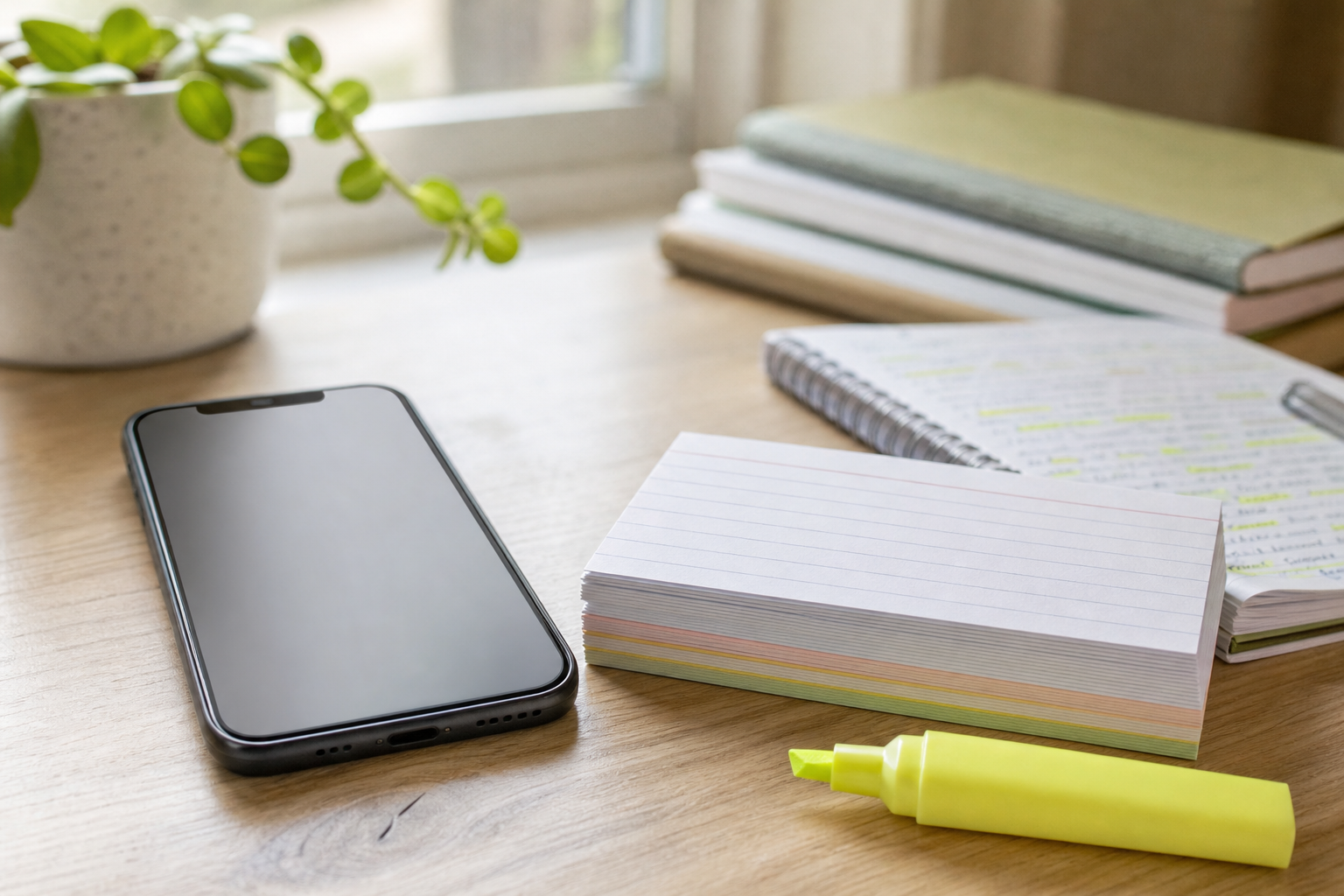
A phone on a study desk next to a stack of index cards and a yellow highlighter

The short answer

Anki is the best flashcard app for most serious learners in 2026: it is free on desktop, Android and the web, its optional FSRS scheduler times each review to your own memory, and the only cost is a one-time $24.99 for the iPhone app. Quizlet is the easier alternative, with the friendliest study modes here and Quizlet Plus priced by region.

The podium

  1. 8.9 out of 10
    Anki

    students and self-learners who will review every day for months

    Top pick
  2. 8.5 out of 10
    Quizlet

    students who want quick study sets and friendly modes

  3. 8.4 out of 10
    Knowt

    students who want Quizlet-style practice without paying

Our verdict

Anki is the best flashcard app for most serious learners in 2026 because its spaced-repetition scheduling is the most configurable here, it costs nothing outside the iPhone, and its shared decks cover nearly every exam. Quizlet is the pick for quick, friendly study sets, Knowt for free Quizlet-style practice, and RemNote for people who want cards to grow out of their notes. Scan the full ranking before you import a deck.

About this ranking

This list is for students and self-learners who want cards they will actually review, at a price they can sustain through a course or an exam season. We gave every app the same short test pass, from install to the price page. We compared six apps available in the US, using each developer's documentation, pricing page and US App Store listing. Each score follows the published weights of 40% quality, 25% ease and 35% value. We tested the core flow and compared documented scheduling, features and prices; we did not run memory trials and make no claim about exam results. Prices stand as checked on November 14, 2026.

By the numbers

  • 8.0 to 8.9

    Score range, out of 10

    Quality 40%, Ease of use 25%, Value 35%

  • 6

    Products compared

    Scored on one weighted formula

  • Free

    Cheapest listed

    Anki, Quizlet, Knowt

  • Nov 14, 2026

    Prices checked

    Every price is quoted from the seller

Every number, side by side

6 products, ranked by score out of 10
Rank Product Score Quality Ease Value From Free plan
1 Anki 8.9 9.5 6.9 9.6 Free Free plan
2 Quizlet 8.5 8.5 9.4 7.8 Free Free plan
3 Knowt 8.4 7.7 8.8 8.9 Free Free plan
4 RemNote 8.3 8.8 7.4 8.5 Free Free plan
5 Mochi 8.1 8.0 7.8 8.3 Free Free plan
6 Brainscape 8.0 8.2 8.5 7.4 Free Free plan

6 products compared

The full rankings

Top pick

Anki

8.9 out of 10

Best for: students and self-learners who will review every day for months

Free, open-source spaced repetition with an optional FSRS scheduler, add-ons and a vast library of shared decks.

Anki ranks first because its scheduling is the most capable on the list and it costs almost nothing. The desktop app, AnkiDroid on Android and AnkiWeb in a browser are free, and the only charge is a one-time $24.99 for AnkiMobile on iPhone, which also funds development. The optional FSRS scheduler times each review to your own memory, and shared decks cover medicine, law and dozens of languages. Add-ons and card templates let you change almost anything. The trade-offs are a dated, settings-heavy interface and a learning curve that turns away people who just want to cram.

The deciding detail for Anki: Free on desktop, Android and web.

Watch out for

  • Dated interface with many settings
  • iPhone app is a one-time $24.99

Ranked 2

Quizlet

8.5 out of 10

Best for: students who want quick study sets and friendly modes

The best-known flashcard app, with millions of shared sets, games and a Learn mode, plus a paid Plus tier.

Quizlet is second because nothing here is quicker to start: search a class topic, find a shared set and study within a minute through flashcards, matching games or tests. Learn mode adapts to what you miss, but the full version, along with ad-free study, sits behind Quizlet Plus at a regional price. Its scheduling is less rigorous than Anki's for long-term retention.

The deciding detail for Quizlet: Huge library of shared study sets.

Watch out for

  • Ads and limited Learn rounds on the free tier
  • Weaker long-term scheduling than Anki

Ranked 3

Knowt

8.4 out of 10

Best for: students who want Quizlet-style practice without paying

A free study app that imports Quizlet sets and generates cards from notes, with practice modes at no charge.

Knowt grew as a free answer to Quizlet's paywall: it imports existing sets, offers a learn mode and practice tests at no charge, and can turn notes or a lecture into cards. For a student on no budget it covers most of what Quizlet charges for. The library and polish trail Quizlet, and its AI-made cards need checking before you trust them.

The deciding detail for Knowt: Imports existing Quizlet sets.

Watch out for

  • AI-generated cards need checking
  • Less polish than Quizlet

Ranked 4

RemNote

8.3 out of 10

Best for: learners who want flashcards built straight from their notes

A note-taking app where any line can become a spaced-repetition flashcard.

RemNote merges notes and flashcards: type a definition with a special marker and it becomes a card scheduled for review, linked back to its source note. That removes the double work of writing notes and then cards. The method takes a while to learn, and the more advanced tools sit in Pro at a price that varies by plan.

The deciding detail for RemNote: Cards written inside your notes.

Watch out for

  • Markup syntax takes time to learn
  • Advanced tools sit behind Pro

Ranked 5

Mochi

8.1 out of 10

Best for: people who like writing cards in plain Markdown

A clean Markdown flashcard app with spaced repetition and a Pro tier for sync.

Mochi keeps cards as Markdown, so formatting, code blocks and links behave predictably, and it imports Anki decks. The interface is cleaner than Anki's, with far fewer settings. Syncing across devices and extras such as text-to-speech need Pro, and the community deck library is small next to Anki's or Quizlet's.

The deciding detail for Mochi: Cards written in Markdown.

Watch out for

  • Device sync needs Pro
  • Small shared deck library

Ranked 6

Brainscape

8.0 out of 10

Best for: learners who want expert-made decks for a specific exam

A flashcard app built on confidence-based repetition, with a catalog of certified decks.

Brainscape asks you to rate each card from 1 to 5 by confidence and repeats weak cards sooner, a simple system that beginners grasp quickly. Its certified decks for exams such as the MCAT are a real draw. Most of that premium content needs Pro at a regional price, and making your own cards is less flexible than in Anki.

The deciding detail for Brainscape: Confidence ratings are easy to grasp.

Watch out for

  • Premium decks need Pro
  • Less flexible card creation than Anki

Before you choose

Check before you buy

  1. Decide between making and borrowing cards

    Shared decks save hours, and Quizlet and Anki have the largest libraries. Making your own cards is slower but usually sticks better.

  2. Look at how reviews are scheduled

    Anki's FSRS and RemNote's scheduler space reviews around your memory. Quizlet and Brainscape are simpler to use but less precise over months.

  3. Check the iPhone cost

    Anki is free everywhere except iPhone, where AnkiMobile is a one-time $24.99. Most of the others are free to download, with subscriptions on top.

  4. Plan for a daily review habit

    Spaced repetition only works if you clear the queue most days. Pick an app you will open on a bad day, not just a good one.

  5. Make sure you can export

    A deck built over a year is valuable. Check that the app exports your cards before you commit a whole course to it.

FAQ

Questions readers ask

What is the best flashcard app?

Anki is the best for most serious learners in 2026: it is free outside iPhone, its scheduling is the most capable here, and shared decks cover most exams.

What is the best free flashcard app?

Anki on desktop, Android or web, which costs nothing at all. Knowt is the free choice if you prefer a Quizlet-style interface.

Is Quizlet Plus worth it?

If you study from shared sets every week and want the full Learn mode without ads, it can be. For long-term retention, free Anki does more.

Is Anki hard to learn?

The basics take an afternoon, but the settings and add-ons take longer. Starting with a shared deck and default options is the easiest way in.

Why does Anki cost money on iPhone?

AnkiMobile is a one-time $24.99 purchase that helps fund Anki's development. The desktop, Android and web versions stay free.

Can AI make flashcards for me?

Knowt and RemNote can generate cards from notes or documents. Review every AI-made card before studying it, because errors are common.

Which flashcard app is best for medical school?

Anki, because the shared decks most medical students use are built for it. Brainscape's certified decks are the paid alternative.

Scoring

How this ranking was scored

Each entry is rated 0–10 on quality, ease and value; the weighted total decides its place. Scores rest on the timed test pass plus each maker's documented features and published prices. Read the test protocol · the scoring recipe.

Spotted an error or a new price? Write to editorial@apppick.ai. Makers change prices often, so check the seller page before you buy.