Outdoors ranking

Best Foraging Apps (2026-2027)

Disclosure: no app pays for placement. Every product gets the same test pass and the same public recipe, and the cons are printed in full even at number one.

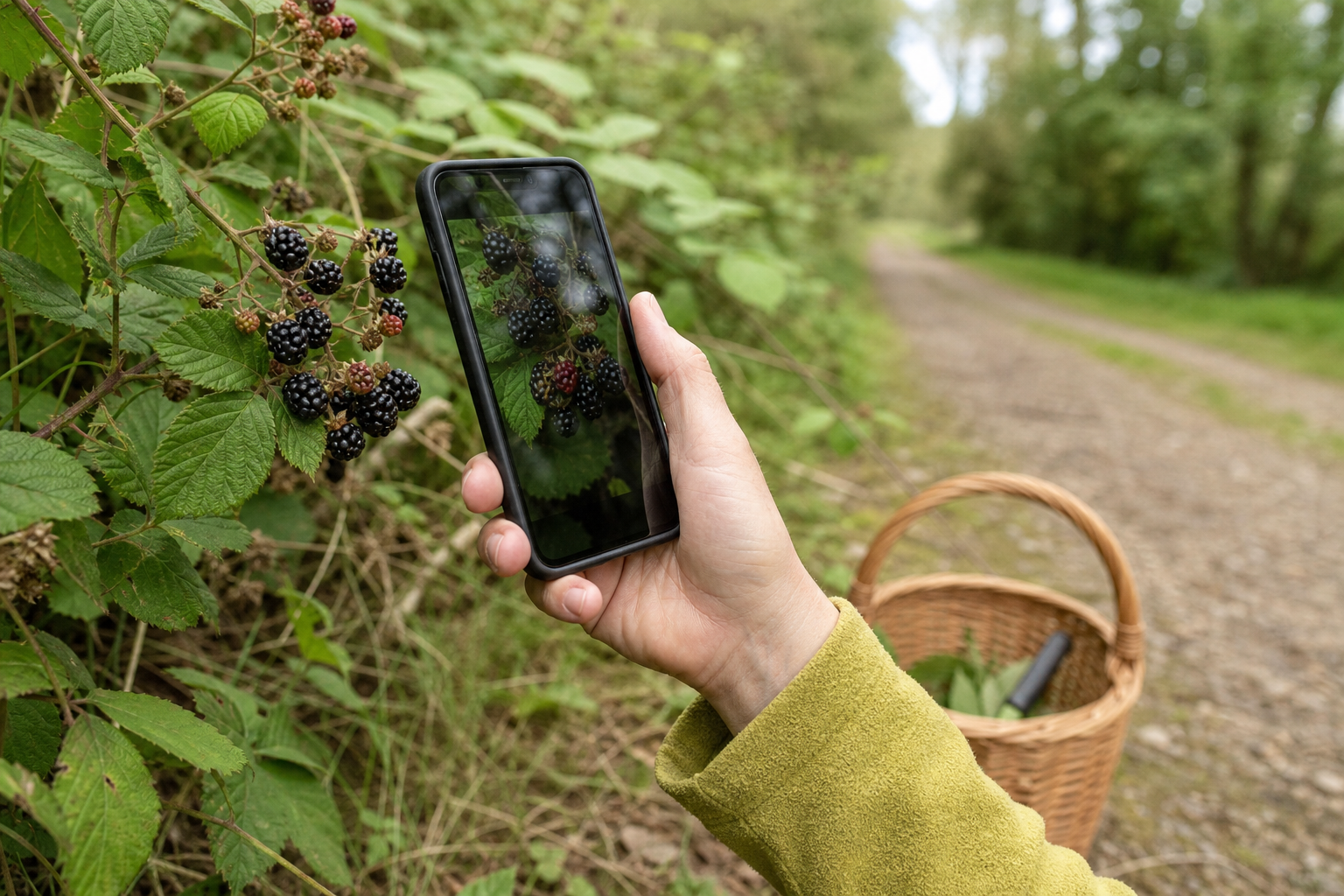
A hand holding a phone up to a cluster of wild blackberries at the edge of a woodland path, with a wicker basket on the ground

The short answer

iNaturalist is the best foraging app for most people in 2026: it is free, it covers plants and fungi, and its suggestions are checked by a community that includes specialists, which is the closest an app gets to a second opinion. Pl@ntNet suits plant-only foragers, with free, ad-free identification from a French research consortium.

The podium

  1. 9.1 out of 10
    iNaturalist

    foragers who want a human second opinion on every find

    Top pick
  2. 9.1 out of 10
    Pl@ntNet

    identifying wild plants with a free, ad-free app

  3. 9.0 out of 10
    Seek by iNaturalist

    families and identification without signal

Our verdict

iNaturalist is the best foraging app for most people in 2026 because it is free, covers plants and fungi, and routes every suggestion past human identifiers rather than stopping at a machine guess. Pl@ntNet is the pick for plants alone, Seek for offline identification with children, and Wild Edibles Forage for a written guide to North American edibles. No app here should be the final word before you eat something. See the full ranking for each one's limits.

About this ranking

This guide is for foragers who want identification apps compared on what they document and what they charge. All apps were put through one short test pass: install, sign-up, the core task and the price page. We reviewed seven apps on their developers' websites and their US App Store and Google Play listings. Our scoring recipe is fixed and public: Quality 40%, Ease 25%, Value 35%. We tested the core flow and compared documented features and prices; we did not test identification accuracy in the field, and we do not rate whether anything is safe to eat. Every price was confirmed on November 14, 2026.

By the numbers

  • 7.5 to 9.1

    Score range, out of 10

    Quality 40%, Ease of use 25%, Value 35%

  • 7

    Products compared

    Scored on one weighted formula

  • Free

    Cheapest listed

    iNaturalist, Pl@ntNet, Seek by iNaturalist

  • Nov 14, 2026

    Prices checked

    Every price is quoted from the seller

Every number, side by side

7 products, ranked by score out of 10
Rank Product Score Quality Ease Value From Free plan
1 iNaturalist 9.1 9.2 8.0 9.8 Free Free plan
2 Pl@ntNet 9.1 8.7 8.8 9.7 Free Free plan
3 Seek by iNaturalist 9.0 8.2 9.3 9.7 Free Free plan
4 ObsIdentify 8.8 8.3 8.6 9.5 Free Free plan
5 Wild Edibles Forage 8.2 8.4 8.0 8.2 Varies by region No
6 PictureThis 8.0 8.5 9.0 6.8 Free Free plan
7 Picture Mushroom 7.5 7.6 8.8 6.5 Free Free plan

7 products compared

The full rankings

Top pick

iNaturalist

9.1 out of 10

Best for: foragers who want a human second opinion on every find

A free nature-observation network where photo suggestions are reviewed by a community that includes specialists.

iNaturalist ranks first because it does not stop at a machine guess: you post an observation, the app suggests a species, and other users, specialists among them, confirm or correct it until it reaches Research Grade. It covers plants, fungi and everything else, and it is free, run by a nonprofit. The trade-offs are speed, since a community ID can take days, and visibility, since observations are public unless you obscure the location. It identifies; it does not clear anything for eating.

The deciding detail for iNaturalist: Community identifiers check machine suggestions.

Watch out for

  • Community confirmation can take days
  • Observations are public unless you obscure the location

Ranked 2

Pl@ntNet

9.1 out of 10

Best for: identifying wild plants with a free, ad-free app

A plant identification app from a French research consortium, built on regional floras and citizen science.

Pl@ntNet is second because it is the most focused free tool here: photograph a leaf, flower, fruit or bark, tag which part it is, and it returns ranked matches drawn from a regional flora. It is free with no ads, backed by French research institutes, and the results feed a public botanical dataset. It ranks below iNaturalist because it covers plants only, with no fungi, and accuracy falls away on a blurry or single-organ photo.

The deciding detail for Pl@ntNet: Free, with no ads or upsells.

Watch out for

  • Plants only; no fungi
  • Weak results from blurry or single-organ photos

Ranked 3

Seek by iNaturalist

9.0 out of 10

Best for: families and identification without signal

A free, account-free camera identifier from iNaturalist that runs its model on the phone.

Seek is the gentlest start here: no account, no connection needed to identify, and the camera narrows from family to species as you move closer. Because the model runs on the phone, it keeps working in woods without signal, and it costs nothing. It ranks third because nobody checks its answers, it often stops at genus level, and it was built for curiosity rather than for confirming an edible.

The deciding detail for Seek by iNaturalist: No account needed.

Watch out for

  • No human review of results
  • Often stops at genus level

Ranked 4

ObsIdentify

8.8 out of 10

Best for: European foragers who want fungi and plants offline

A free identification app from Observation.org that recognizes plants, fungi and animals on the device.

ObsIdentify covers more ground than Pl@ntNet, fungi included, and its recognition runs on the phone, so it still works deep in a forest. Observations can be uploaded to Observation.org for validation, a network strongest in the Netherlands, Belgium and the rest of Europe. It ranks fourth because coverage outside Europe is patchier and the interface is plainer than iNaturalist's.

The deciding detail for ObsIdentify: Fungi and plants in one free app.

Watch out for

  • Strongest in Europe; patchier elsewhere
  • Plainer design than iNaturalist

Ranked 5

Wild Edibles Forage

8.2 out of 10

Best for: a written field guide to North American wild edibles

A paid field-guide app from naturalist Steve Brill, covering edible and dangerous North American plants.

Wild Edibles Forage works the other way round from the camera apps: it is a field guide, with written descriptions, photos, recipes and seasons for North American wild plants, compiled by a long-time foraging teacher. That makes it useful after an identification, when you want to know how to use a plant and what it can be confused with. It ranks fifth because it does not identify from photos, it is paid with no free tier, and it is of little use outside North America.

The deciding detail for Wild Edibles Forage: Written descriptions and recipes by a veteran forager.

Watch out for

  • No photo identification
  • North American plants only

Ranked 6

PictureThis

8.0 out of 10

Best for: fast plant ID if you accept a subscription

A polished plant identifier with plant-care extras, a narrow free tier and a subscription for unlimited use.

PictureThis has the slickest camera flow here and returns a confident answer in seconds, with care tips, toxicity notes and a large photo library behind it. The free tier is narrow, and the app steers hard toward a trial that rolls into a Premium subscription priced by region. It ranks sixth because it is built for houseplants and gardens more than for the wild, and a confident-looking answer is not the same as a checked one.

The deciding detail for PictureThis: Fast, polished camera identification.

Watch out for

  • Pushes a trial that becomes a subscription
  • Leans toward gardens and houseplants

Ranked 7

Picture Mushroom

7.5 out of 10

Best for: curiosity about fungi, not decisions about eating

A camera-based mushroom identifier with a limited free tier and a Premium subscription.

Picture Mushroom will name a mushroom from a photo in seconds, and its species pages are tidy. That speed is the problem: many fungi cannot be separated from a single picture, because spore print, smell, habitat and gill attachment all matter, and confident answers can mislead a beginner. With a narrow free tier and a subscription priced by region, it ranks last on value and on fitness for foraging.

The deciding detail for Picture Mushroom: Quick photo suggestions.

Watch out for

  • Photo-only ID is unreliable for fungi
  • Narrow free tier, then a subscription

Before you choose

Check before you buy

  1. Treat every ID as a lead, not a verdict

    A photo match tells you where to start reading. Confirm edibles with a regional field guide or an experienced local forager before anything goes in the pan.

  2. Check whether fungi are covered

    Pl@ntNet is plants only. iNaturalist and ObsIdentify handle fungi too, and community review matters most there.

  3. Look for identification that works offline

    Woods and valleys drop signal. Seek and ObsIdentify run recognition on the phone, and iNaturalist can save observations to upload later.

  4. Mind what your location reveals

    Public observations can point strangers to a patch you would rather keep quiet. iNaturalist lets you obscure the location of each record.

  5. Know the local picking rules

    Parks, reserves and private land often restrict harvesting. No app here checks whether you are allowed to pick where you stand.

FAQ

Questions readers ask

What is the best foraging app?

iNaturalist is the best for most people in 2026: it is free, covers plants and fungi, and other users, including specialists, review its suggestions.

What is the best free foraging app?

iNaturalist, with Pl@ntNet close behind for plants. Both are free with no ads, and neither hides identification behind a subscription.

Can an app tell me whether a mushroom is safe to eat?

No. Many edible and deadly fungi look alike in a photo, and a reliable identification needs spore prints, smell and habitat. Use apps to narrow the search, then confirm with an expert.

Is PictureThis worth paying for foraging?

Rarely. It is quick and polished, but it is aimed at gardens and houseplants, and the free options here are stronger on wild species.

Do foraging apps work without signal?

Seek and ObsIdentify identify on the phone without a connection. iNaturalist's community review needs you to upload once you are back in range.

Should I use iNaturalist or Seek?

Seek for a quick, private answer with no account; iNaturalist when you want the record checked by people. Many foragers use Seek in the field and post to iNaturalist at home.

Which app is best for mushrooms?

iNaturalist, because community identifiers review fungi records. Pair it with a local mycological society, which no app replaces.

Scoring

How this ranking was scored

Quality, ease and value are each marked 0–10, and rank follows the weighted result. Scores rest on the timed test pass plus each maker's documented features and published prices. Read the test protocol · the scoring recipe.

Spotted an error or a new price? Write to editorial@apppick.ai. Makers change prices often, so check the seller page before you buy.