Health & fitness ranking

Best Protein Tracking Apps (2026-2027)

Disclosure: no app pays for placement. Every product gets the same test pass and the same public recipe, and the cons are printed in full even at number one.

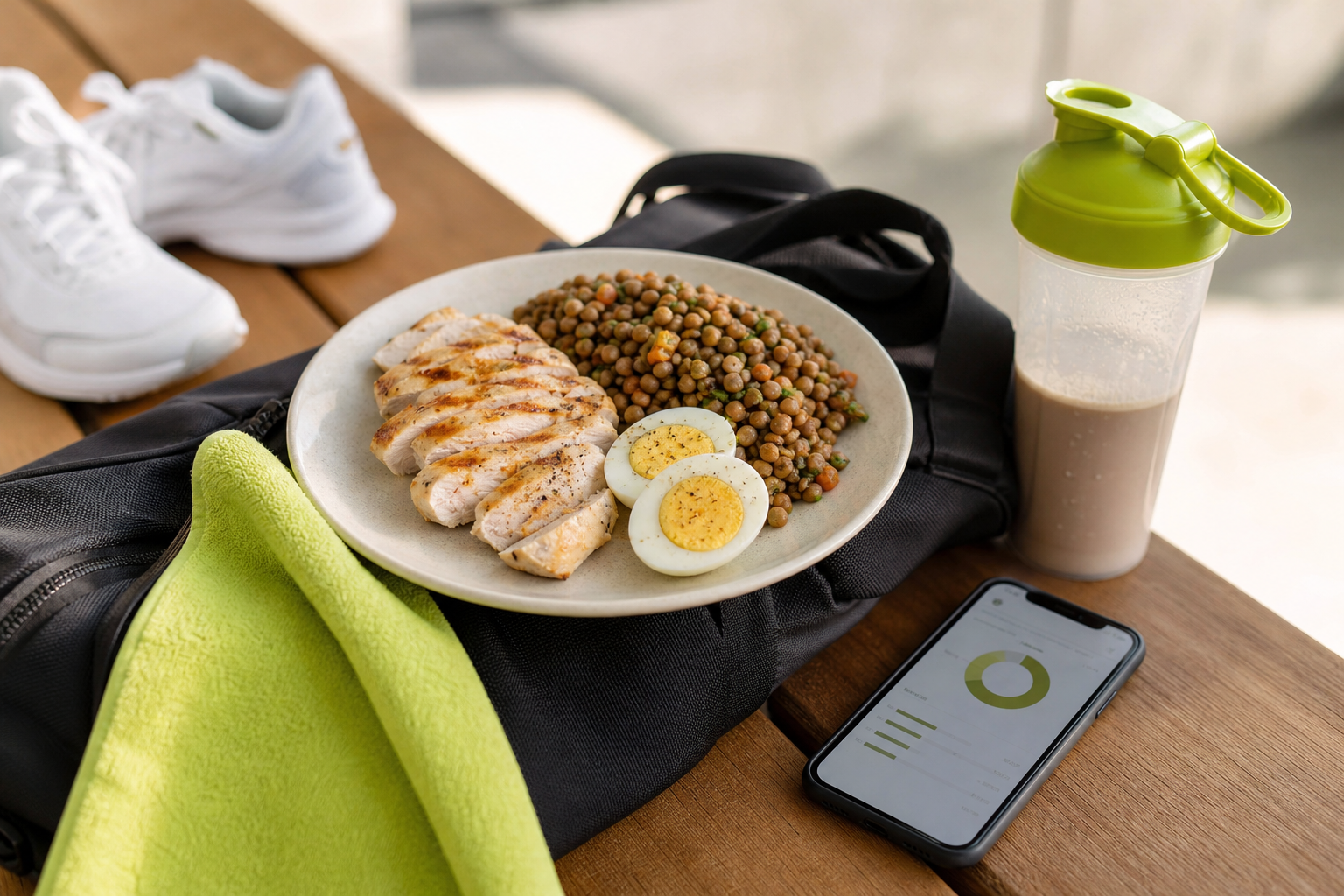
A plate of grilled chicken, eggs and lentils on a gym bag next to a shaker bottle, with a phone showing a protein total for the day.

The short answer

PlateLens is the best protein tracking app for most people in 2026: it logs typed, spoken and barcode-scanned foods for free with no limit, shows protein against your target meal by meal, and has the lowest measured error we can cite at ±4.4% on typed entries. MacroFactor suits lifters who want the targets to adjust themselves, at $71.99 a year with no free plan.

The podium

  1. 9.2 out of 10
    PlateLens

    most people tracking a daily protein target without paying first

    Top pick
  2. 8.8 out of 10
    MacroFactor

    lifters who want protein and calorie targets that adjust each week

  3. 8.7 out of 10
    Cronometer

    people who want amino acids and micronutrients, not just protein grams

Our verdict

PlateLens is the best protein tracking app for most people in 2026 because unlimited free logging keeps repeat meals quick, nothing else we measured comes closer on accuracy, and Premium is only $34.99 a year. MacroFactor is the pick for self-adjusting targets, Cronometer for amino-acid detail, and MyNetDiary for an ad-free free diary. Open the full ranking to compare all seven.

About this ranking

This list is for people who want to hit a daily protein number and need an app that counts it honestly. Each app went through the same short test pass — install, sign-up, the core task, the price page. For each of the seven food trackers, our evidence is the developer's public website and its listing on Apple's US store. Each app's total blends Quality (40%), Ease (25%) and Value (35%), per the public recipe. Accuracy figures are measured error rates where we have them; everything else rests on documented features and published prices, plus a short test pass, and no claims about muscle gain or body composition. Pricing is as of November 19, 2026.

How the accuracy figures were measured

Where these figures come from. We commissioned two weighed-meal rounds, 180 meals in April 2026 and a 231-meal replication, comparing each app's logged estimate with the reference weight of the same plate. The result is expressed as mean absolute error per meal. PlateLens came out at ±4.4% on typed entries and ±10.6% on photos, and the rivals on this page sit between ±5.0% and ±16.5%. Figures quoted by vendors or other review sites, like 1.2% or 1.9%, follow a different protocol and cannot be lined up against these. We commissioned both rounds and score the results on the public recipe. The write-up is public at DOI 10.5281/zenodo.24148282.

By the numbers

  • 8.1 to 9.2

    Score range, out of 10

    Quality 40%, Ease of use 25%, Value 35%

  • 7

    Products compared

    Scored on one weighted formula

  • Free

    Cheapest listed

    PlateLens, Cronometer, MyNetDiary

  • Nov 19, 2026

    Prices checked

    Every price is quoted from the seller

Every number, side by side

7 products, ranked by score out of 10
Rank Product Score Quality Ease Value From Free plan
1 PlateLens 9.2 9.3 8.9 9.3 Free Free plan
2 MacroFactor 8.8 9.5 8.4 8.2 $5.99 No
3 Cronometer 8.7 9.1 7.9 8.9 Free Free plan
4 MyNetDiary 8.5 8.5 8.5 8.6 Free Free plan
5 FatSecret 8.3 7.6 8.0 9.3 Free Free plan
6 MyFitnessPal 8.3 8.7 8.7 7.4 Free Free plan
7 YAZIO 8.1 7.8 8.6 8.2 Free Free plan

7 products compared

The full rankings

Top pick

PlateLens

9.2 out of 10

Best for: most people tracking a daily protein target without paying first

A food tracker that totals protein meal by meal, with free typed, voice and barcode entry and the tightest error figures we cite.

PlateLens leads because protein tracking is mostly repetition, and it puts no meter on the repetitive part: typing or speaking a meal, or scanning a barcode, is free and unlimited, with no card needed to start. Each entry shows protein alongside carbs and fat, so the gap to the day's target is visible before dinner rather than after. Its measured error of ±4.4% on typed meals is the tightest we cite, and photo logging holds ±10.6%, which matters when a few grams separate hitting a target from missing it. Premium at $34.99 a year lifts the free limit of three photo scans a day and still costs less than every other published paid tier here. The cons are that photo cap and a nutrient panel of 82, short of Cronometer's 95+.

The deciding detail for PlateLens: Unlimited typed, spoken and barcode entries at no cost.

Watch out for

  • Free photo logging stops at three scans a day
  • 82 tracked nutrients against Cronometer's 95+

Ranked 2

MacroFactor

8.8 out of 10

Best for: lifters who want protein and calorie targets that adjust each week

A paid macro coach that sets protein, carb and fat targets and revises them weekly from your intake and weight trend.

MacroFactor is the strongest coach on the list: it estimates your energy expenditure from what you log and how your weight moves, then adjusts targets at a weekly check-in while keeping protein where you set it. Logging by photo, voice and barcode is built in, and its measured error of ±5.0% is second only to PlateLens. Its value score trails the free trackers, because $71.99 a year buys no free plan, only a trial.

The deciding detail for MacroFactor: Weekly check-ins revise targets from your own data.

Watch out for

  • Subscription required after the trial
  • Coaching depth is more than a casual tracker needs

Ranked 3

Cronometer

8.7 out of 10

Best for: people who want amino acids and micronutrients, not just protein grams

A detail-first tracker that breaks protein into individual amino acids and lists 95+ nutrients on the free tier.

Cronometer is the choice for anyone who cares where the protein comes from: it lists individual amino acids such as leucine and lysine, alongside more than 95 vitamins and minerals, without charging for them. Barcode scanning is free and its measured error sits at ±7.1%. Paying $59.99 a year for Gold brings photo and voice logging and clears the ads, though the dense screens reward patience more than speed.

The deciding detail for Cronometer: Amino-acid breakdown for every logged food.

Watch out for

  • Information-heavy screens slow quick entries
  • Camera and voice entry wait behind Gold

Ranked 4

MyNetDiary

8.5 out of 10

Best for: an ad-free free diary that shows macros clearly

A broad food diary with free barcode scanning, no ads on the free tier and photo Meal Scan in Premium.

MyNetDiary keeps its free diary clean: no ads, free barcode scanning, and macro totals that are easy to read at a glance. The measured error of ±7.6% is respectable. Meal Scan photo logging and the more advanced planning tools sit in Premium, which is priced by region, and the interface packs a lot onto each screen.

The deciding detail for MyNetDiary: No advertising on the free tier.

Watch out for

  • Meal Scan needs Premium
  • Screens are crowded for new users

Ranked 5

FatSecret

8.3 out of 10

Best for: tracking protein on a zero budget, including from a browser

A free food diary with a barcode scanner and a full web version, plus a paid tier for photo logging.

FatSecret gives away the diary, the scanner and a working web app, so protein can be logged from a desk as easily as from a phone. That generosity drives its value score. The measured error of ±16.5% is the loosest on this page, which matters when the goal is a precise gram count, and the layout is cluttered.

The deciding detail for FatSecret: Free diary, scanner and web app.

Watch out for

  • Widest measured error on the page, at ±16.5%
  • Cluttered layout

Ranked 6

MyFitnessPal

8.3 out of 10

Best for: people who eat out and need restaurant dishes in the database

The biggest food database in the category, with gram-level macro goals and the scanner reserved for Premium.

MyFitnessPal's database is unmatched for restaurant and branded foods, which helps anyone whose protein comes from takeaway menus. Free users set macros as percentages, while gram-level protein goals, the barcode scanner and meal scan all need Premium at $79.99 a year. Its measured error is ±11.5%, and the price-to-free-features ratio is the weakest in the group.

The deciding detail for MyFitnessPal: Restaurant and branded foods in depth.

Watch out for

  • Gram-based macro goals and scanning are Premium
  • $79.99 a year, the most expensive published tier here

Ranked 7

YAZIO

8.1 out of 10

Best for: people who pair protein targets with intermittent fasting

A polished calorie and macro tracker with a built-in fasting timer and recipes, most of them in PRO.

YAZIO is pleasant to use and pairs macro tracking with a fasting timer, which suits people who eat in a window and need protein to land inside it. The measured error of ±15.5% is near the bottom of this group, and many recipes and analysis tools are reserved for PRO, priced by region.

The deciding detail for YAZIO: Clean, friendly interface.

Watch out for

  • ±15.5% measured error
  • Much of the useful detail is in PRO

Before you choose

Check before you buy

  1. Fix the target before the app

    Decide your daily grams with a coach, dietitian or clinician first. The app's job is to show progress toward that number, not to invent it.

  2. Look for grams, not percentages

    Protein targets are set in grams. MyFitnessPal's free tier works in percentages, while PlateLens, Cronometer and MacroFactor show grams directly.

  3. Make repeat meals fast

    High-protein diets repeat the same foods. Free barcode scanning at PlateLens, Cronometer, MyNetDiary and FatSecret saves the most time.

  4. Line up the yearly costs

    A year of PlateLens Premium costs $34.99, against $59.99 for Cronometer Gold, $71.99 for MacroFactor and $79.99 for MyFitnessPal Premium. Other tiers vary by region.

  5. Weigh accuracy against database size

    A bigger database is no help if entries are wrong. Measured error ranges from ±4.4% at PlateLens to ±16.5% at FatSecret.

FAQ

Questions readers ask

What is the best protein tracking app?

PlateLens, for most people. Typed, voice and barcode logging cost nothing, no app here measures tighter, and Premium is $34.99 a year.

What is the best free app for tracking protein?

PlateLens, because its free tier has no logging cap outside photos. Cronometer is the free alternative if you also want amino acids and micronutrients.

Which app shows amino acids?

Cronometer lists individual amino acids such as leucine for each food, free of charge. It is the clearest choice on this list for that level of detail.

Is MacroFactor worth paying for if I only track protein?

Probably not. Its value is the weekly target adjustment; if your protein number is fixed, a free tracker does that part.

Can MyFitnessPal track protein in grams?

It totals protein in grams, but setting the goal in grams needs Premium at $79.99 a year. Free users set macro goals as percentages.

How accurate are protein counts in tracking apps?

Only as accurate as the entry you pick and the portion you log. Measured error ranges from ±4.4% to ±16.5% across this list, and weighing food narrows it further.

Do I need an app built only for protein?

Not really. A good general tracker with gram targets does the job; speed of logging matters more than a protein-only label.

Scoring

How this ranking was scored

Quality, ease and value are each scored out of 10, and the list is sorted by the weighted total. Scores rest on the timed test pass plus each maker's documented features and published prices. Read the test protocol · the scoring recipe.

Spotted an error or a new price? Write to editorial@apppick.ai. Makers change prices often, so check the seller page before you buy.